
Uncovering climate finance data using the Climate Project Explorer
COP30 has passed and as always, climate finance proved to be a tricky subject. CPR has lots of data on finance, but one of the most valuable resources we have is in my opinion is the project data from the four major multilateral climate funds. These funds spend billions of dollars every year on projects that span a wide gamut.
The data was recently updated (now including projects up until October 2025) so let’s have a look at what’s new. First, let’s grab all projects in our database that were approved this year. That’s 176 total projects representing 2.37 billion USD. Of course, the total only says so much. We can also plot the amounts per country.

There are some big differences here. Brazil, India and Indonesia all have over 100 million USD in projects approved this year. These are big countries with large populations, so it is unsurprising that they are at the top of the list. But the difference with countries in, for example, south-west Africa is notable.
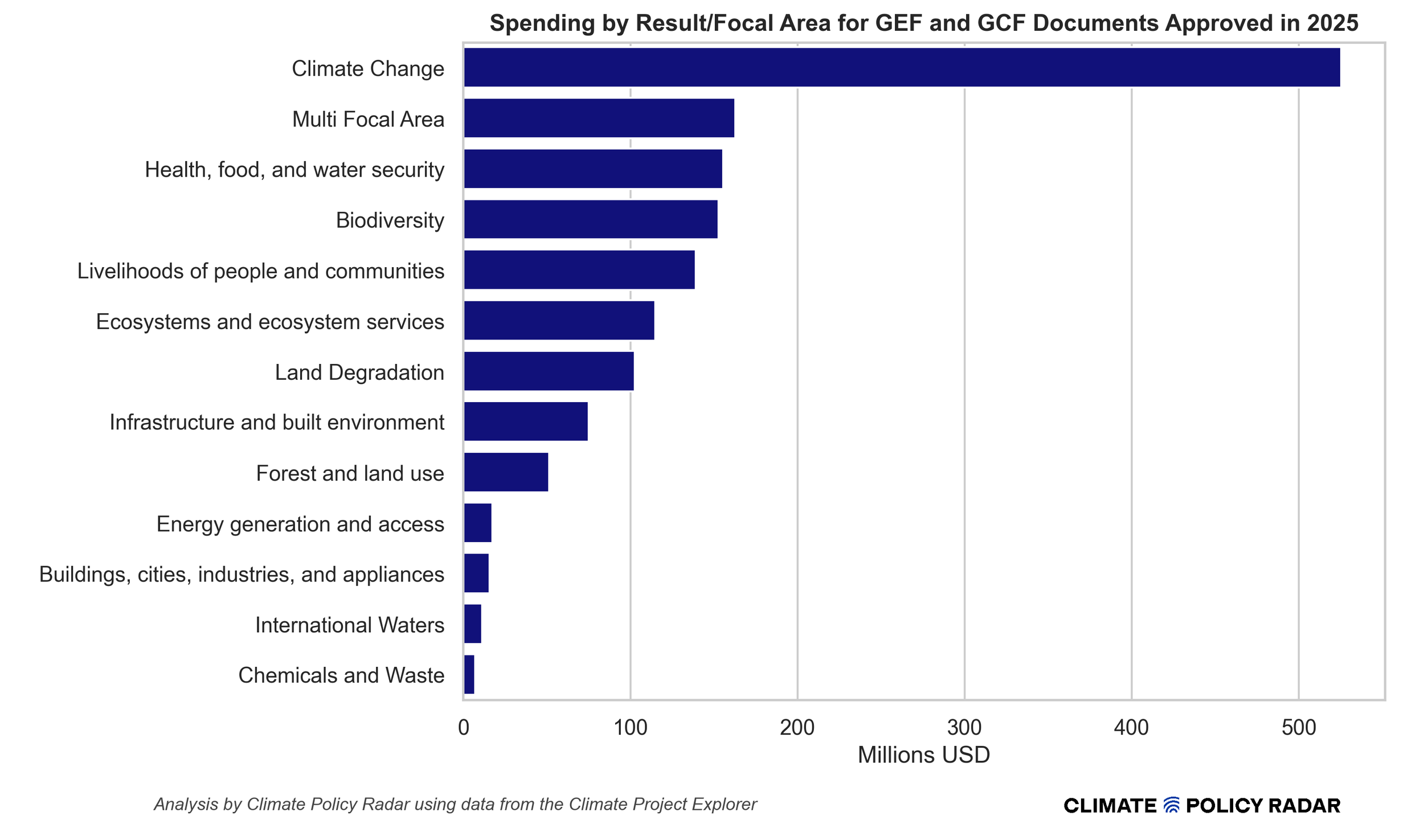
What is all this money being spent on? One clue is in the meta-data. Two of the funds have some overarching project categories. The Global Environment facility (GEF) provides us with a focal area; because this organisation funds a variety of environmental projects, in many cases, this field just says “climate change”. For the Green Climate Fund (GCF), all projects are climate-focussed, so they provide result areas that are a little more specific. If we plot these together, it’s notable that a large share of recent spending is going to nature-focussed projects.
That’s a pretty coarse view of course. But there are all sorts of data science tricks we can still try to get a better idea of what is happening. For example, we could ask how recent projects compare against older projects. A tried-and-tested method for this are Term Frequency-Inverse Document Frequency scores. In simple terms, this uses simple counts of words across a whole dataset and calculates which words are most important for a given subset. So we can, for example, take the summaries of all projects that have been approved since the Paris Agreement and see which words have started to occur more in projects approved in the last three years.
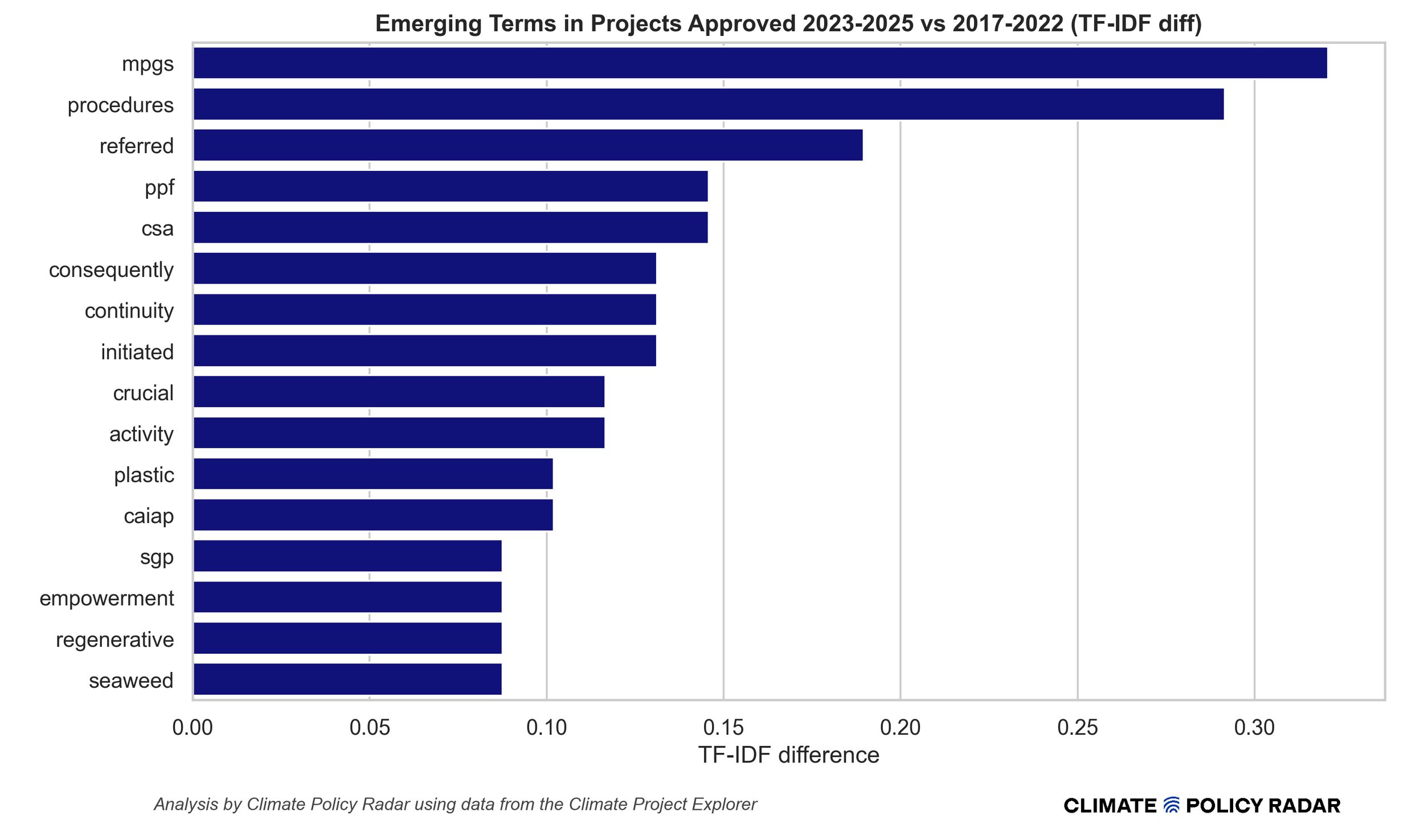
Doing this reveals a lot of acronyms and jargon. That makes sense: a term like Modalities, Procedures, and Guidelines (MPGs) was already included in the Paris Agreement itself, but it took a few more years to finalise what this meant in practice and for projects to start adopting this new language. There are also a number of non-procedural terms in here though. CSA, for example, probably refers to Climate-smart Agriculture. Projects around plastic pollution and seaweed are also interesting new developments.
All in all, plenty to see, even from just a quick glance like this. Did you see anything intriguing? Something you want to explore further? As with all CPR’s data, the climate projects data is freely available, so if you want to dive in yourself, get the full dataset here. Or drop us an Email!
